

Alabama utility rates have soared with Oden on the PSC
His re-election bid faces opposition in the May 19 GOP primary

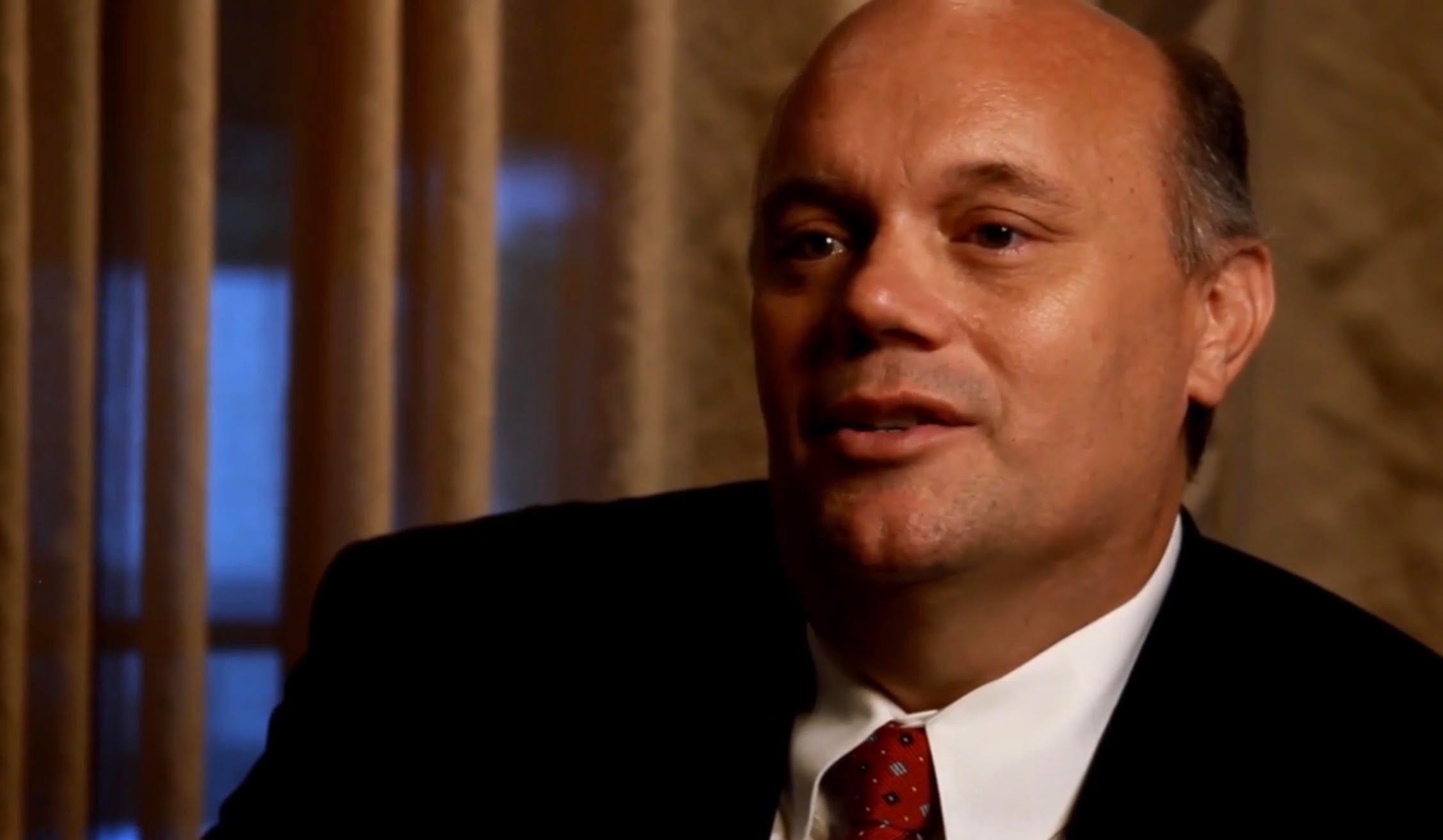
With Jeremy H. Oden on Alabama’s Public Service Commission, state residents have seen utility rates continue to increase to become some of the highest in the country while efficiency has decreased.
And, it’s now been more than 40 years since the PSC held a rate case hearing for the state’s largest utility.
Oden is seeking re-election to the PSC in the May 19 Republican primary. His opponent is Matt Gentry.
As of February, the latest data available, Alabama has the fourth highest monthly electricity bills in the country, according to saveonenergy.com. The national average monthly electricity bill for February, according to the site, is $152.32. Alabama’s is $184.94. That’s higher than every state in the South. Florida is closest at $174.43.
And according to Axios, Alabama and Texas counties have the most expensive electricity bills in the country, with most counties in Alabama seeing $261 monthly electricity bills.
As of January, Alabama’s residential natural gas rate was $16.59 per thousand cubic feet, making it the 10th highest rate in the country based on states for whom data was available, according to chooseenergy.com. The national average was $13.94. In neighboring Tennessee and Mississippi, the rates are $11.23 and $12.68, respectively.
Since Oden was appointed to the PSC in December 2012, the average electricity rate in Alabama has increased more than 41% from $0.1126/kWh to $0.161/kWh in December 2025. That’s higher than any bordering state, with Florida is closest at $0.1592/kWh.
Since 2012, Alabama has seen electricity rate increases at a higher percentage than all neighboring states (Tennessee 30.5%, Georgia 31.8%, Florida 33.5% and Mississippi 36.7%)
And on top of higher rates, Alabama’s energy efficiency has decreased since Oden joined the PSC.
In 2012, Alabama ranked 40th out of 51 on the American Council for an Energy-Efficient Economy, which ranks states and the District of Columbia on policies and programs to advance energy efficiency. By 2025, Alabama had dropped to 50th, ahead of only Wyoming.
Daniel Tait, president of Energy Alabama, says Alabama Power’s sister companies Georgia Power and Mississippi Power have a rate case when they want to raise rates. A rate case is a public hearing and forces those companies to provide the public with information explaining why a rate increase is necessary.
More than half of Alabama’s energy consumers are customers of Alabama Power, but Alabama Power hasn’t had a rate case hearing since 1982, according to a WBRC news investigation.
“How do we know that we’re actually getting a fair deal?” Tait asks. “Well, we don’t. They should match the practice of practically every other utility company, including its own sister companies like Georgia Power and Mississippi Power. …
“For the power company and the Public Service Commission to say with a straight face that no one deserves to have a say or even be in the room when one of the biggest factors in a utility bill is decided, that’s crazy to me. …
“The people deserve to have somebody that’s actually looking at these calculations and making sure that filings are correct. Is this really the best deal that we’re getting right now? We don’t know. We’ve never seen the records. Nobody can see the records.”
According to the WBRC report, the industry standard for measuring equity is ROE, or return on equity. But the Alabama PSC doesn’t measure that for Alabama Power.
In the 1980s, the Alabama PSC switched to a formula rate that adjusts Alabama Power’s bills every year without a traditional rate case. And in 2013, the PSC switched from using ROE to something called a weighted return on average retail common equity. It shows a much lower number than traditional ROE.
In a recent interview, Oden has said rate cases can “cost millions of dollars and a lot of time.”
But Ari Pesco, director of the Electricity Law Institute at Harvard Law School, says consumers benefit from a rate case.
“There can be billions of dollars at stake, and it’s worth the time and the money,” he told WBRC. “We don’t just trust a monopolist that provides essential services and doing it for profit.”
In that recent interview, Oden also questioned the motives of parties that call for a formal rate case.
“I’d like to ask, why would an intervenor, legislator or candidate want to call for a Formal Rate Case?” Oden asked. “Because of the money they will make. There are rate case lawyers, energy intervention experts and environmental intervenors all over the country who get paid millions of dollars to come in and intervene in rate cases. I did say millions! …
“I would question any candidate, legislator or individual that calls for this type of hearing. They are in it for money, contribution or publicity. In Alabama, that cost is not there.”
So, it seems as if the PSC is propping up Alabama Power’s profits.
A new report by S&P Global ranking state utility regulators puts Alabama’s PSC in its own category: above average. In plain terms, that means the PSC is considered investor-friendly.
“If you look at Alabama Power’s return on equity or a marker of their profit compared to neighbors, it’s substantially higher,” Tait said in the WBRC story. “That means that every year, Alabama Power collects about $250 (million) to $300 million more in profit.”
Tait says the Alabama PSC has been derelict in its duties.
“Their job is to play the judge, if you will, between the needs of a power company and the desire to make money versus also the other side of making sure that regular people get the service they need at a fair price,” Tait said. “We would argue that the Public Service Commission has allowed this, you know, rate structure essentially that has been essentially unchanged and unchecked since the early 1980s to go on far too long.”
Alabama Power is one of the most politically influential companies in the state.
Since 2013, it has shelled out nearly $5 million to PACs, and Alabama Power’s PAC paid out more than $3.3 million directly to candidates, including donations to nearly every state lawmaker.
Oden has not received campaign donations as a PSC candidate from Alabama Power because utilities are not allowed to donate to Alabama PSC candidates, but he did receive money from the company when he was running for the House.
But Oden’s campaign did receive substantial donations from energy-related groups and companies over the years.
In 2022, he received $12,500 from the National Rural Electric Cooperative Association, $10,000 from the Alabama Coal Cooperative and $10,000 from Altec, which supplies products and services to, among others, the electric utility market.
In 2018, he received $10,000 from the National Rural Electric Cooperative Association and $2,000 from Warrior Coal Sales.
In 2015, he received $1,000 each from Best Coal, Black Rock Energy, Black Warrior Minerals, Cedar Lakes Mining and Alabama Coal Cooperative.
In 2013, he received $5,000 from the National Rural Electric Cooperative Association, $2,500 from the Alabama Coal Cooperative and $500 from Cahaba Resources
For his 2022 campaign, Oden raised at least $205,000 from PACs among his $259,000 total contributions.
While these contributions aren’t all from fossil fuel interests, an al.com article notes that they “[fuel] the long-held perception that the Alabama PSC is more beholden to special interests than consumers.”
Over the course of his first 12 years on the PSC, Mother Jones reports that Oden received about $1.3 million, roughly 80 percent of his campaign funds, from sources with links to fossil fuel companies and utilities.
“Our analysis and leaked records revealed that Oden’s top donors were political action committees operated by accountants with long-standing ties to consultants for Alabama Power, the state’s largest utility,” the report states.