

Canadian wildfires bring hazardous air conditions to Great Lakes states
By Elyse Apel | The Center Square
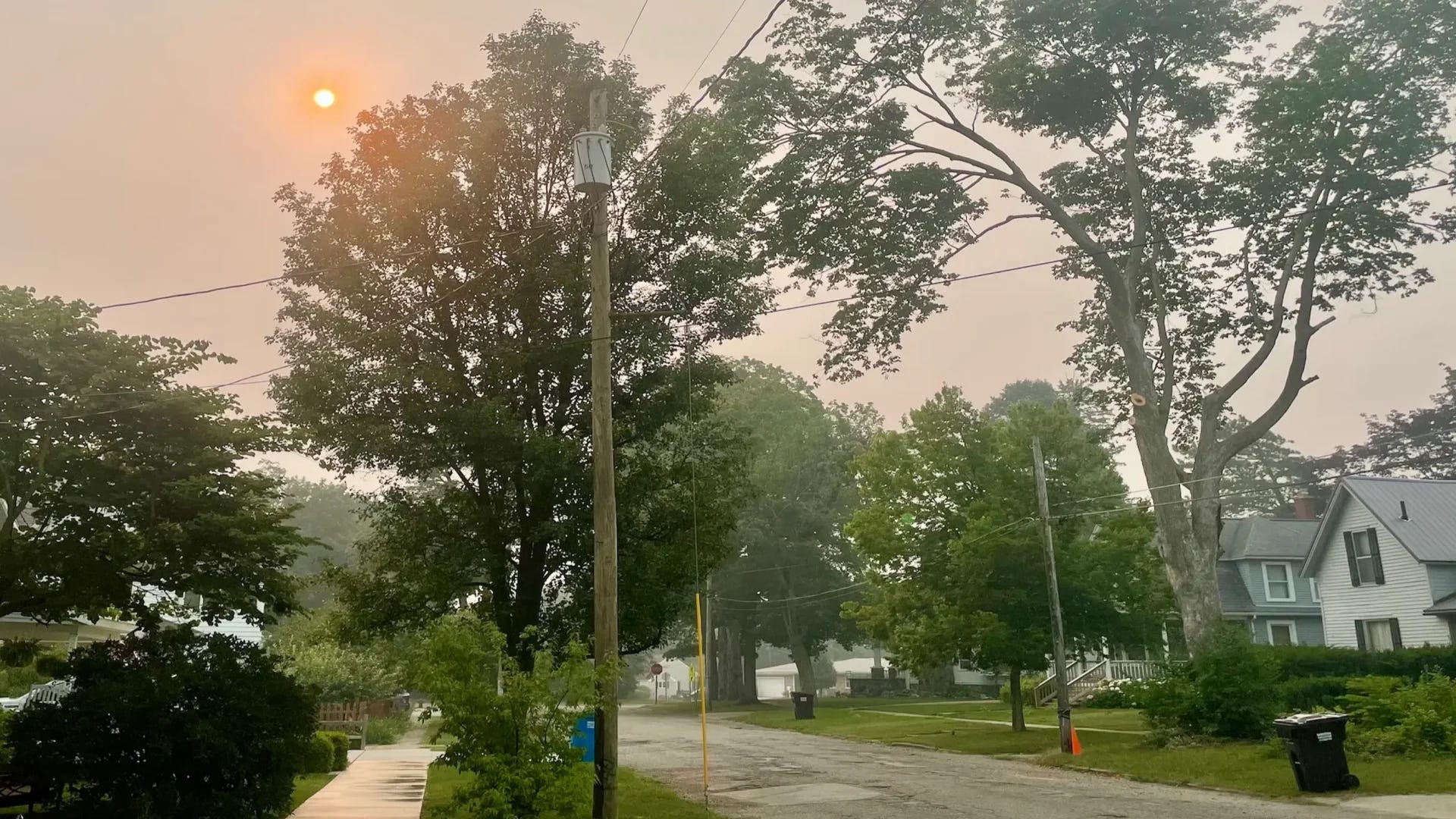
(The Center Square) – Canadian wildfires are fueling hazardous air qualities across the U.S., with Great Lakes states experiencing some of the most hazardous conditions.
Nearly 20 states have air quality alerts as smoke from more than 180 wildfires in Canada and nearly a dozen in Minnesota drifts as far east as New York City and Washington, D.C.
Michigan, Wisconsin and Minnesota are expected to bear the brunt of the smoke today before it moves east.
“Today’s smoke density will pretty much be maximized over the entire state of Michigan,” said Michigan Storm Chasers. “Expect hazy skies, reduced visibility and poor air quality to continue.”
The current air quality index is at hazardous levels throughout much of the Great Lakes region. Hazardous is the most-dangerous AQI level and means everyone should avoid outdoor activities.
The hazardous ranking begins at an AQI of 300, though some areas, including Detroit at 474 and Minneapolis at 421, are recording levels significantly higher than that.
Detroit officially has the worst metro air quality worldwide, while some smaller communities are logging AQI levels of more than 1,000:
• Virginia, Minnesota: 1,165
• Potawatomi, Wisconsin: 677
• Southwest Detroit, Michigan: 626
The conditions are expected to last into the weekend, though a shift in the wind should begin to improve air quality Friday.
“Tomorrow, conditions will slowly improve in most locations except northern Wisconsin where Marquette and surrounding communities will continue to see heavy smoke,” said Thursday’s report from the US Interagency Wildland Fire Air Quality Response Program. “Limited visibility should be expected on the water and on roads in northeastern Minnesota, northern Wisconsin, and northern Michigan and boaters and drivers should limit speed and use caution when encountering these conditions.”
As hazardous air conditions continue, experts recommend staying indoors as much as possible, running HVAC and car AC units on recirculate, and wearing an N95 mask when outdoors.
Elyse Apel, a graduate of Hillsdale College, is a reporter for The Center Square covering Minnesota and Michigan. Her work has appeared in a range of national outlets, including the Washington Examiner, The American Spectator, and The Daily Wire.