

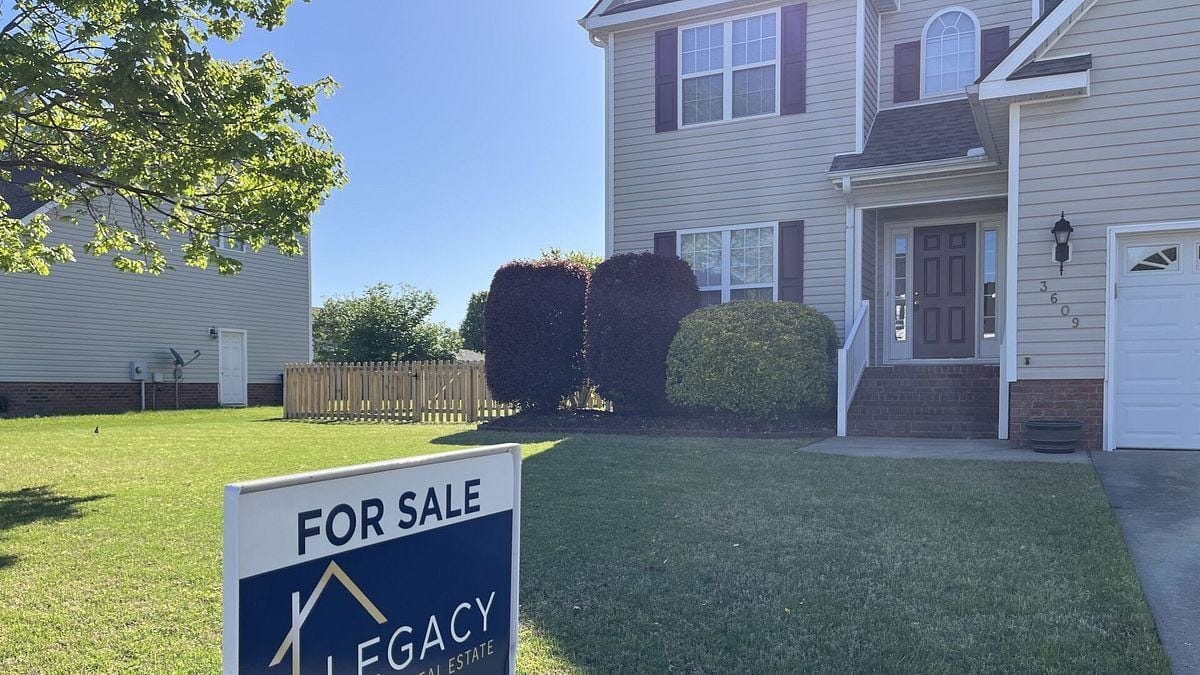
(The Center Square) – Sales of new single-family houses dropped more than 10% from June to July, as the average price of a new home grew by roughly 4%, a new U.S. Census Bureau report shows.
New home sales last month were at a seasonally adjusted annual rate of 607,000 units, compared to 678,000 new single-family units that sold in June, even though supply grew by nearly 2%.
The report, however, covers only a small fraction of total home sales in July. Existing home sales, which make up an estimated 90% of total home sales, have remained generally stable, dropping 1.7% since June, the National Association of Realtors reports.
But mortgage rates are stubbornly resting around 6% and home prices have increased by 54% nationwide since 2020 – more than double the cumulative increases in the typical salary during the same period – putting homeownership out of reach for many Americans.
A report from the Harvard Joint Center for Housing Studies, entitled “The State of the Nation’s Housing 2026,” outlines the severity of America’s housing affordability crisis.
For the fifth consecutive year, the median sales price of an existing single-family home is hovering around five times the median household income. In order to afford payments on a median-priced home in late 2025, a U.S. household needed to make at least $120,800 annually, up from $68,700 five years earlier.
The crisis hits younger Americans particularly hard. Only 23% of for-sale listings in March were affordable, under standard lending terms, for households earning $75,000 or less per year, JCHS found.
Based on salary data from the U.S. Census Bureau, 17% of Americans ages 18 to 35 make $75,000 or more per year, meaning more than 80% of young adults are priced out of 77% of the housing market.
Achieving homeownership, however, is half the battle, the JCHS report shows, with monthly mortgage payments on a median price home at $2,420, versus $1,240 at the end of 2020.
When taking property taxes, mortgage insurance, and property insurance into account, JCHS found that monthly homeownership costs exceeded $3,100.
That economic reality is forcing greater numbers of young adults to rent, co-own, or live with parents, slowing household growth across the U.S., JCHS senior research associate Daniel McCue noted.
“Many young adults simply cannot afford to form their own households and are instead doubling up or living with family,” McCue stated. “For others, deep uncertainty about their financial futures and about the broader economy are causing them to delay major life decisions. This pullback is a clear sign of economic stress that reverberates through housing markets.”
Though the U.S. Census says the homeownership rate in the U.S. is 65%, just over half of U.S. adults actually own homes.
That’s because the federal government’s estimate reflects only the “owner-occupancy” rate, meaning it essentially counts the number of owner-occupied houses, rather than the number of people who are homeowners.
When the Federal Reserve Bank of Minneapolis instead used a homeowners-to-population ratio – measuring the share of adults who are homeowners rather than the share of homes lived in by the owner – it found the true homeownership rate is 53%. It also found that only 22% of adults under age 35 own homes.