


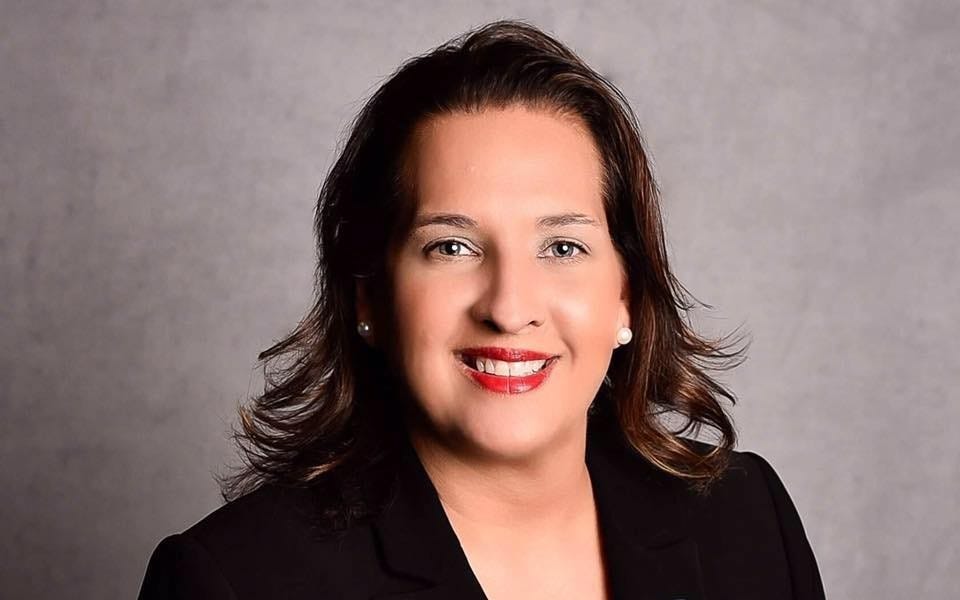
By changing her party affiliation to Republican last year, Faline Locklear Dial helped make history.
When Dial along with fellow Robeson County Commissioners Judy Sampson and Lance Herndon made the switch from Democrat to Republican, they helped swing the commission to have a GOP majority for the first time ever.
Dial also became the first Republican woman to represent District 4 on the commission. She said she believes serving as a Republican allows her to better represent her constituents.
“After much prayer, consideration and consultation with my constituents, I made the decision to change my party affiliation to Republican,” Dial said. “District 4’s voting history over the past several election cycles has voted Republican, and I want to be the best representative for my constituents as possible.
“This change does not impact my standards in making sound decisions for Robeson County, and I look forward to continuing to serve my district as county commissioner.”
Dial’s opponent in the March 3 primary is Scott Bell.
Dial is the owner of Speech N Progress, a speech therapy company. And last year, she was elected chairwoman of the Robeson Community College Board of Trustees. She is a 1991 graduate of the University of North Carolina-Chapel Hill.
A Democratic stronghold for decades, Robeson County shocked observers by voting for Donald Trump in 2016. Since then, the county has increasingly voted Republican up and down the ballot, largely fueled by the rightward shift among the county’s Lumbee voters.
“For the first time in Robeson County’s history, the commissioner board reflects the values of the people: faith, freedom and fiscal responsibility,” said Dr. Phillip Stephens, Robeson County Republican Party Chairman. “This shift isn’t about partisanship; it’s about finally aligning with the conservative principles that our community has lived by for generations.”
Democratic voter registration in the county has dropped significantly, down to 41% from 71% just 10 years ago. Republican registration has climbed from 12% to 21% since 2015, and unaffiliated registration from 18% to 37% since 2015.