

Iowa farmers could benefit from renewable energy development bills
Two bills would give developers clarity for the permitting process

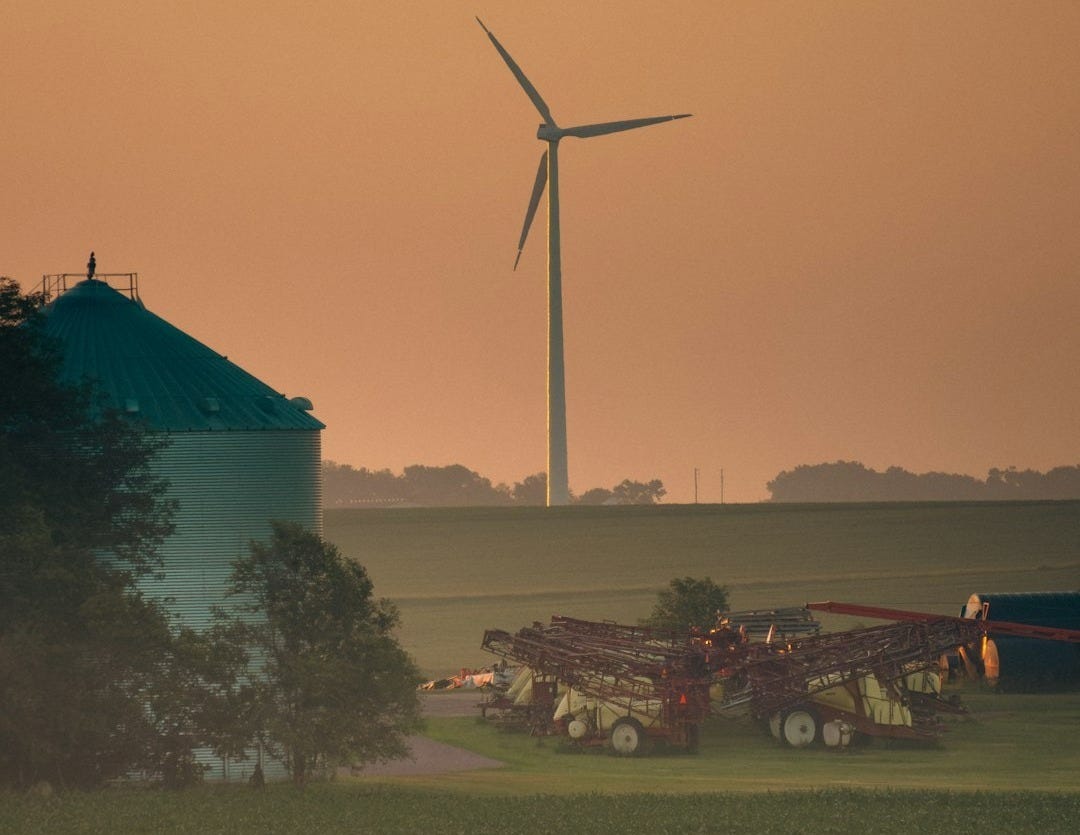
Affordability of energy is a top issue for many Iowans Americans.
In Iowa, one of the highest mixes of traditional to alternative energy has produced one of the lowest average costs of electricity in the nation.
And when it comes to building additional power capacity, counties often have the final say. About 50% of Iowa counties have limited or banned alternative energy projects.
Twin proposals now before the Iowa legislature aim to give developers of new power plants clarity on the citing and permitting process in the state on renewable energy projects.
And one official says the possibility of adding renewable energy could see huge benefits for Iowa farmers.
“Farmers understand risk better than anyone,” said Nick Boeyink, executive director of Iowa Conservative Energy Forum. “They live it every year. Renewable energy gives landowners another tool to manage that risk, another way to generate stable income and keep farms in the family.
“Taking that option away doesn’t protect rural Iowa. It limits it.”
According to SaveOnEnergy, based on data from the U.S. Energy Information Administration, the average household electricity bill in Iowa in December 2025 was $104.83, compared to the national average of $148.80, placing Iowa among the 10 states with the lowest average household electricity bills. Iowa households saw a 2.4% increase in price per kWh over December 2024.
While there is no single, up‑to‑date statewide tally, data suggests that roughly 15–25 of Iowa’s 99 counties currently have, or recently have had, significant restrictions or moratoria affecting new utility‑scale wind and/or solar projects.
Currently, local government officials have the ability to reject and shut down renewable energy development in Iowa communities.
Studies have found that blocking such development can result in fewer jobs, lost investment and tax revenue as well as higher prices for energy consumers.
House File 2580 and Senate File 2447, both introduced in February, would establish statewide siting standards for renewable energy projects, allowing communities to maximize the benefits associated with renewable energy generation.
According to the Iowa Utilities Commission, nearly 63% of the energy generated in Iowa in 2024 came from wind power. By contrast, about 21% came from coal and 14% from natural gas. Solar, hydro, and other renewables accounted for close to 3%.
And in a study of renewable energy in Iowa, the Common Sense Institute found that from 2010 to 2025, the national average residential electricity cost increased by 51.3%, compared to just 32.4% in Iowa. This correlated with a significant increase in renewables’ share of Iowa’s electricity grid, showing that investment in and development of renewable energy has helped to drive consumers spending on utilities down.
Moreover, the Common Sense Institute found that communities in which wind turbine development expanded between 2010 and 2024 saw marginally lower property tax rate increases or larger decreases, and between 2010 and 2025, wind and solar facilities in Iowa generated an estimated $1.22 billion in property tax revenues for local governments.
Notably, Common Sense Institute’s research showed that in school districts with wind turbines, the average homeowner paid $194 less in property taxes than a comparable homeowner in a district with no wind turbines. In fact, homeowners in school districts with no wind turbines are hit with 26% higher property taxes than those in districts with wind power generation.
From 2016 through 2025, there was a combined $23 billion in private investments in renewable energy, which appears to have correlated with job growth, economic growth, and lower property taxes.
But the Common Sense Institute determined that without the projected private sector investment of $29 billion in Iowa’s wind, solar, and battery storage over the next decade, the state would lose out on an average of at least 5,500 jobs annually, $10.6 billion in GDP growth, $17.4 billion in personal business sales, $7.6 billion in personal income and $6.9 billion in personal disposable income.
The Common Sense Institute says Iowa has “transitioned to renewables as its primary source of electricity generation while maintaining competitive energy markets and bringing quantifiable benefits to the state’s economy and taxpayers.”
House File 2580 and Senate File 2447 would reduce obstacles currently preventing landowners from generating additional revenue by leasing their land to renewable energy developers and make the process for building and maintaining renewable energy facilities more transparent for renewable energy developers.